
How to Make Senior Bathrooms Safer?
Fast Facts: Senior Bathroom Safety & Fall Prevention
- Bathrooms are one of the most common locations for fall-related injuries in older adults, with wet floors, high tub entries, and poor lighting among the leading hazards.
- Grab bars, non-slip mats, and walk-in showers are the three most impactful modifications for improving bathroom safety for seniors.
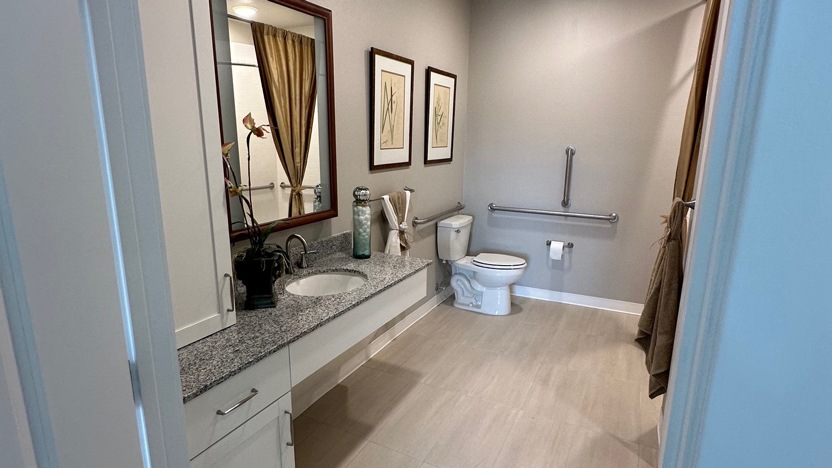
- Senior living communities are built with accessible, step-free bathrooms, anchored grab bars, and 24-hour staff support to reduce fall risk at every care level.
- Simple, low-cost additions – like a raised toilet seat, motion-activated night lights, and non-slip adhesive strips – can meaningfully reduce fall risk without a full remodel.
Grab bars, non-slip surfaces, and better lighting are three modifications that can make a senior bathroom significantly safer. At Valage Senior Living, our team understands that the bathroom is often the most hazardous room in the home – and that the right modifications can change that. For families caring for an aging loved one, addressing these risks helps prevent injuries and supports lasting independence.
Fortunately, keeping older family members safe does not require an overwhelming home remodel. By making small changes, improving the safety of a living space becomes simple. Starting with senior bathroom safety helps families protect loved ones from injuries while maintaining their independence. These adjustments transform a room that poses the greatest risk of danger into a space of comfort and independence.
What Is Senior Bathroom Safety?
Bathroom safety for seniors does not center on restricting freedom or focusing heavily on what someone cannot do. Instead, it represents the autonomy to live life on your terms while making sure help is available at your fingertips. By making smart design choices and specialized fall prevention equipment, a bathroom supports an active mentality.
Why Bathrooms Are the Most Dangerous Room for Seniors
To establish bathroom safety for seniors, we need to recognize environmental hazards that lead to accidents. Understanding these factors can help homeowners understand the changes they need to make to improve senior bathroom safety in their homes:
- Water from showers creates slick and slippery surfaces that compromise balance.
- Stepping over high tub walls or shower edges requires major coordination.
- Standing up from low surfaces, such as low toilet seats, strains joints and increases the risk of falls.
- Loose bath mats and cluttered pathways block safe movement and create tripping hazards.
- Dim light bulbs or limited lighting make it difficult to see standing water or floor changes.
- Outdated outlets near water sources pose the risk of electrocution.
7 Essential Senior Bathroom Safety Features
Transforming a traditional bathroom involves combining physical adjustments with modern senior care technology. Changing these features improves safety and peace of mind.
Non-Slip Mats & Slip-Resistant Surfaces
Some important changes you can make focus on reducing bathroom slipping hazards. Applying non-slip adhesive strips in the tub or shower and replacing traditional rugs with anti-slip mats helps prevent slipping on slick tile floors, improving bathroom safety for adults.
Grab Bars & Rails
Installing sturdy grab bars is an absolute necessity for supporting seniors in the bathroom. These bars should be securely anchored into wall studs next to the toilet and inside the shower; towel racks are not designed to support human weight and should never be used for balance. Properly placed bars provide reliable leverage, helping individuals stand and move safely.
Improved Bathroom Lighting for Seniors
Clear visibility is vital for recognizing hazards, such as puddles. Upgrading to high-wattage LED bulbs ensures the entire room is illuminated evenly. Adding motion-activated night lights along the pathway to the bathroom provides automatic illumination during late-night visits, reducing confusion and improving senior bathroom safety.
Raised Toilet Seats
A low toilet seat forces an individual to bend deeply, increasing the risk of falling. Installing a raised toilet seat reduces the physical effort required to stand up. This simple addition enhances independent mobility and reduces the risk of falling.
Walk-In Showers & Low-Threshold Entries
Stepping over a traditional bathtub wall creates a severe tripping hazard. However, a walk-in shower with a low threshold eliminates this barrier. Combining a barrier-free entryway with a sturdy shower chair allows comfortable bathing while seated. It is a great method for preventing falls at home.
Medical Alert Buttons & Pull Cords
Placing waterproof medical alert buttons or low-hanging pull cords near the floor makes sure a resident can summon assistance immediately. These systems provide a safety net, guaranteeing 24-hour bathroom safety for seniors without taking away personal privacy.
Automatic Faucets
Motion-activated faucets protect older adults from accidental burns by regulating water temperature. They also eliminate the need to grip tight handles, which can be difficult for someone managing arthritis. This feature helps create a highly functional, independent, and safe environment.
How Senior Living Communities Support Bathroom Safety
While making home modifications decreases risks, achieving security can be challenging. Senior living communities are designed with built-in safety features and fall-prevention equipment that emphasize dignity across all levels of care.
- Assisted living: Choosing assisted living gives families confidence that their loved one has personalized support with bathing and dressing. Staff members provide discreet assistance in fully accessible bathrooms around the clock.
- Memory care: For individuals experiencing cognitive changes, memory care provides specialized, dedicated care. These spaces are structured as a secure memory care neighborhood designed to reduce confusion and provide a dementia-friendly home.
Frequently Asked Questions About Senior Bathroom Safety
What is the most important safety feature in a senior bathroom?
Installing grab bars and slip-resistant surfaces is the most critical step. These features target the most common source of injuries: slipping on wet surfaces and losing balance. By reducing bathroom slipping hazards, you can greatly improve the safety of senior adults.
Are home modifications difficult?
Simple adjustments like adding mats and temporary raised toilet seats are easy. However, structural changes, such as converting a traditional tub into a walk-in shower, require professional contractors.
When is moving into a community better than modifying my home?
Explore a senior living community when a loved one’s physical or cognitive needs advance beyond what home updates can safely accommodate. If an older adult requires daily supervision or experiences frequent falls, community living might offer the specialized care they need.
Make Senior Bathroom Safety a Priority
Ultimately, supporting your loved one’s well-being means making changes that empower them to live independently. Addressing senior bathroom safety is just the first step families can take to alleviate anxiety and enjoy meaningful moments together.
If you are evaluating how to provide the safest environment for an older adult, our team at WellQuest Senior Living is always here to answer your questions and guide your family through available care options. We invite you to learn about our lifestyle amenities and learn how our approach to care can improve your loved one’s daily life.